
Most founders reach out to a fractional CFO for one simple reason.
They want to put their finances in place.
Clean numbers.
Better reports.
Fewer unknowns.
And that makes sense. No business can scale without solid financial foundations.
But here is the part that often gets missed.
Finance is not a separate function that sits quietly at the side of the business. It is not a box to tick or a document to sign off once a month.
Finance sits at the heart of how a business actually operates.
When you really look at the numbers, you do not just see revenue and costs. You see how work flows through the company. You see where time is being lost, where teams are under pressure, and where decisions are being delayed or avoided.
That is why a fractional CFO rarely just fixes financial problems.
By analysing the numbers, we often uncover issues that live deep inside the operations of the business. Hiring decisions that are happening too late. Growth plans that look good on paper but cannot be executed in reality. Investments that are being avoided out of caution, even though they are exactly what the business needs next.
Below we share three real stories of how a fractional CFO created value far beyond spreadsheets and reports.
Not by focusing on finance alone.
But by using finance as a lens to improve the business as a whole.
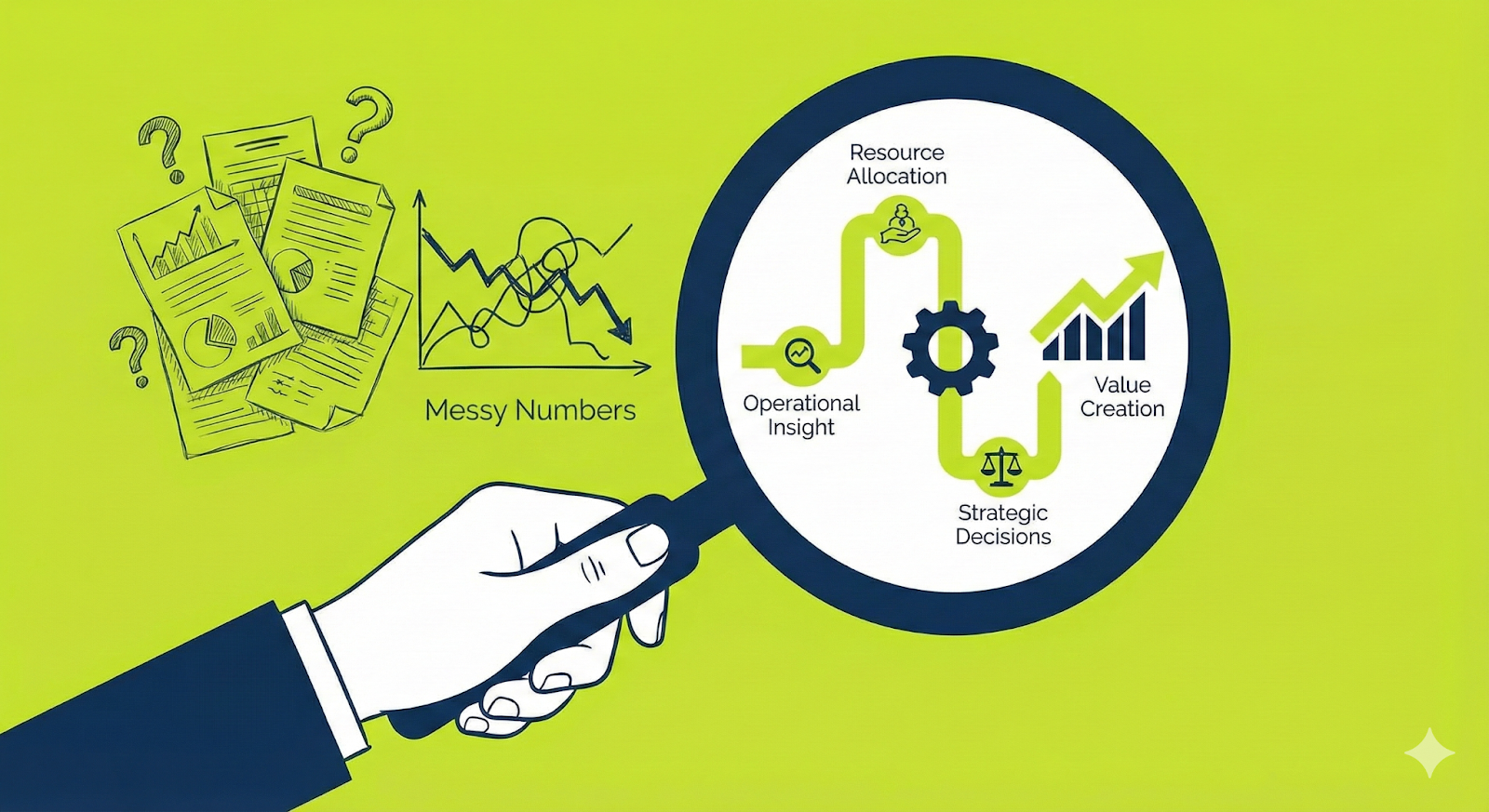
This is how the conversation usually starts.
A founder reaches out and explains that the business has grown quickly. The numbers exist, but they feel messy. Reports are produced, but they are not driving decisions.
What they ask for is simple.
Put the finances in place.
When we joined this business, that was exactly the expectation. Clean up the reporting, create some structure, and make sure everything looks sensible.
But once we started working through the numbers, it became clear that the problem was not financial accuracy.
The numbers were telling a different story.
Margins varied wildly between projects. Certain teams were constantly under pressure, while others had spare capacity. Projects that looked profitable on paper were quietly draining time and energy from the business.
None of these issues showed up as red flags in the accounting reports. But they were obvious when finance was used as a tool to understand how the business actually operated.
Instead of focusing purely on reports, we shifted the conversation.
Why do some projects consistently run over budget?
Why does hiring always feel late rather than planned?
Why are some decisions being revisited every month?
By answering these questions, the founder began to see that finance was not the problem to fix. It was the tool that helped reveal what needed fixing.
Once finance moved to the centre of the business, operational decisions became clearer. The founder stopped reacting to monthly numbers and started using them to shape how the company ran.
That is when real value was created.
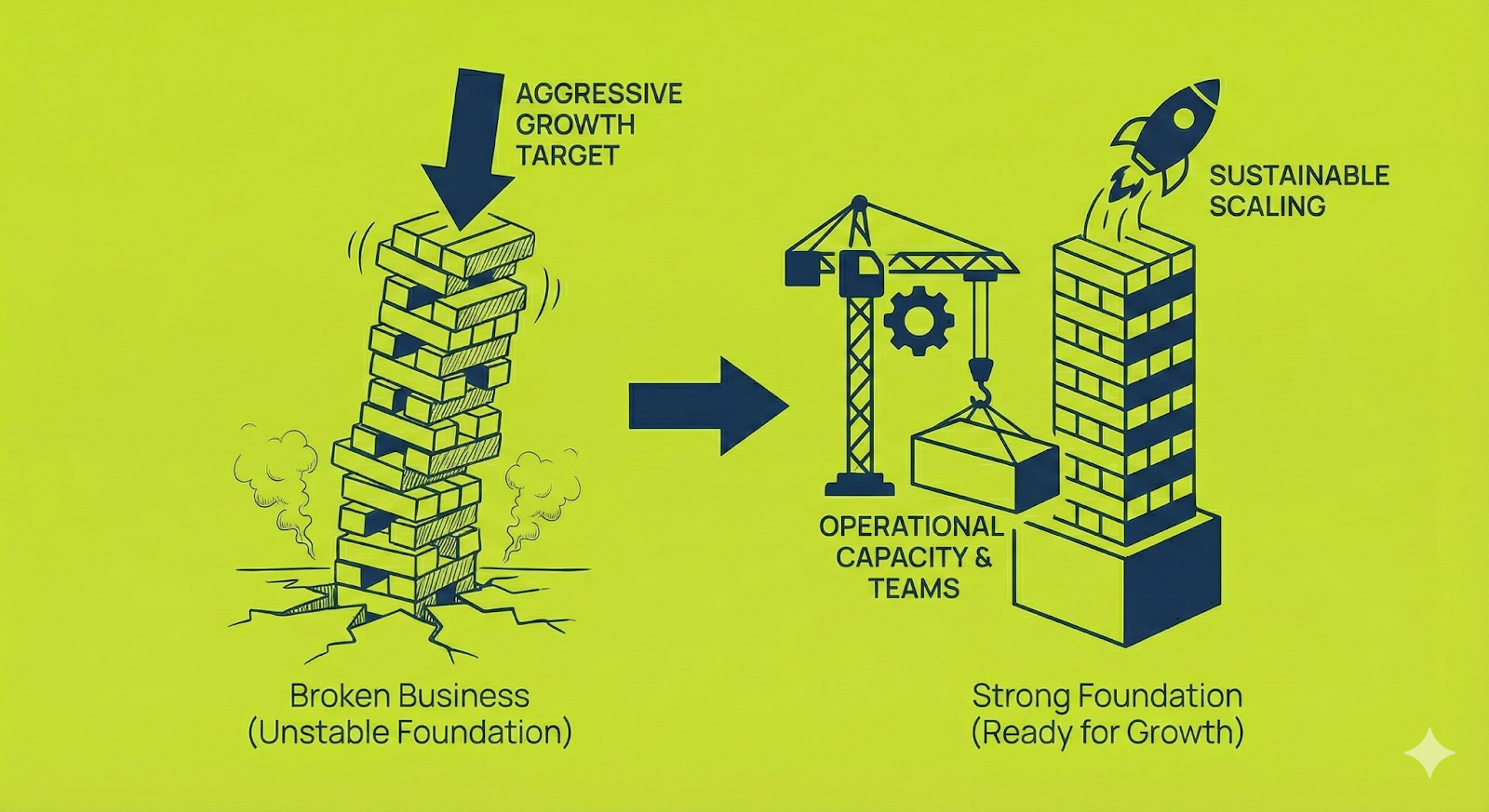
This founder had a clear ambition.
Revenue needed to grow fast. Very fast. Investors were confident, the market was there, and the projections showed a five times increase within a year.
On paper, it looked achievable.
When we reviewed the numbers, we agreed with one thing. The revenue target itself was not unrealistic. Demand could be generated, and sales could support it.
The problem was everything around it.
What the numbers quickly revealed was that the business was not built to handle that level of growth. Hiring plans lagged behind revenue expectations. Key roles were missing. Operational capacity was already close to its limit.
If the growth arrived as planned, the business would not have scaled. It would have cracked.
This is where finance becomes more than forecasting.
By linking revenue projections to operational capacity, we could show the founder something investors had not. Growth is not just about selling more. It is about whether the business can deliver without burning out teams or damaging quality.
Because this was identified early, the founder had time to act.
We reworked the hiring plan. Key roles were brought forward. Costs increased earlier than originally planned, which felt uncomfortable at first.
But when demand increased, the business was ready.
Instead of scrambling to hire in crisis mode, the team was already in place. Delivery stayed strong, pressure stayed manageable, and the business was able to sustain the growth it had promised.
This is the difference between chasing numbers and building a business that can actually support them.
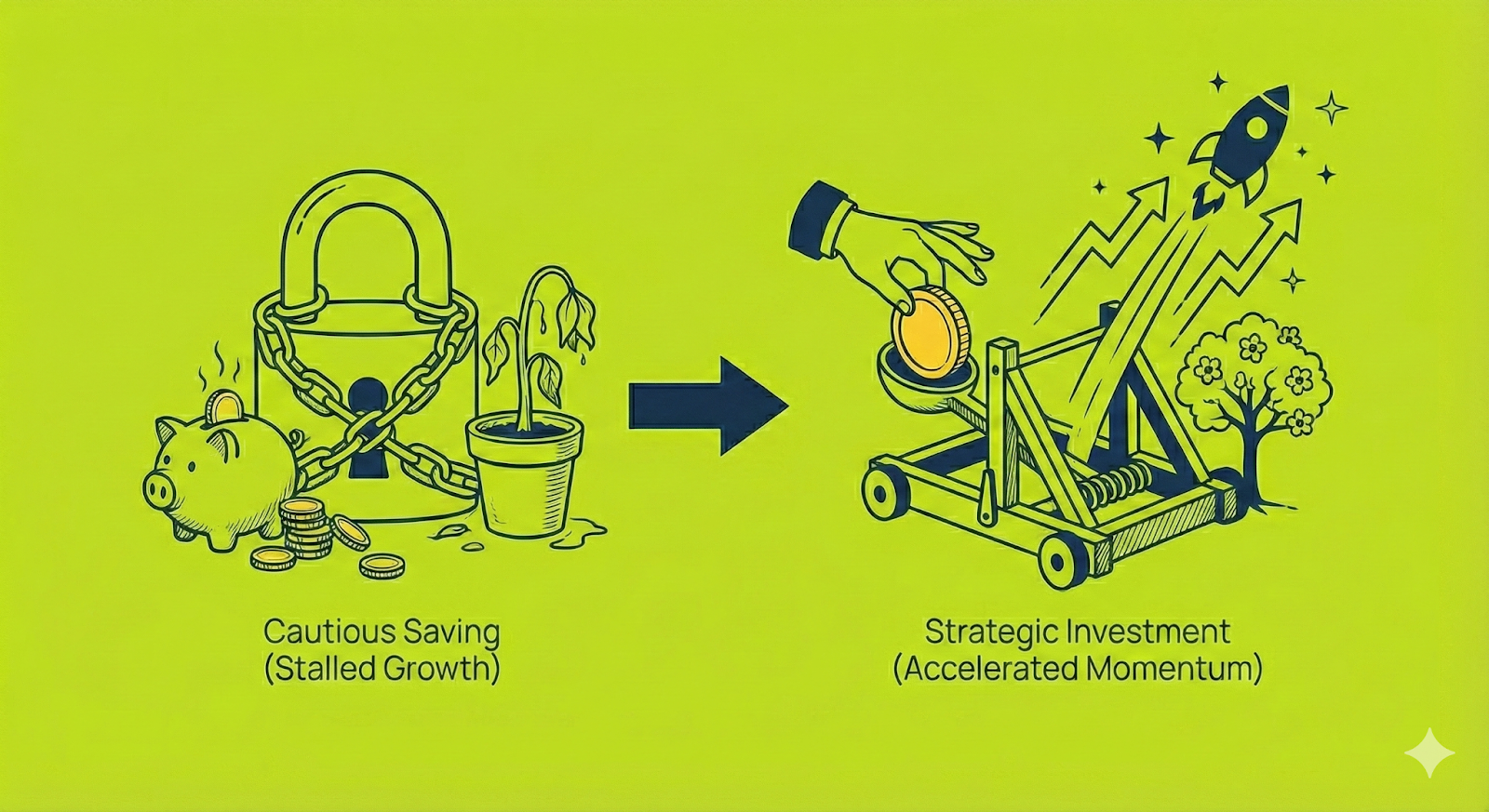
This founder was cautious. And for good reason.
They had built the business carefully, kept costs under control, and avoided unnecessary risk. Every major spend was questioned, challenged, and often delayed.
From a purely accounting perspective, that approach made sense.
But as the business matured, something started to stall.
Growth slowed. Teams worked harder, but results did not scale at the same pace. Opportunities were being discussed, but never fully committed to.
When we stepped in, the instinctive question was familiar.
How do we protect the numbers?
Instead, we reframed it.
What is the cost of doing nothing?
By looking beyond the immediate financial impact, we could see that the business was underinvesting in the very areas that would unlock future returns. Marketing was constrained despite clear signals of demand. Internal processes were stretched but never improved. Decisions were being filtered through short term caution rather than long term value.
This is where the difference between accounting and CFO thinking becomes clear.
A CFO does not just look at whether the business can afford to spend. They look at whether the business can afford not to.
With a full view of the strategy, timing, and expected outcomes, we helped the founder invest intentionally. Not recklessly, but with purpose and conviction.
The numbers dipped slightly in the short term. That was expected.
What followed was not. Improved momentum, stronger positioning, and a business that was once again moving forward rather than holding back.
Sometimes the most responsible financial decision is to lean in, not pull back.
Across all three stories, the pattern is the same.
The problem was never a lack of data.
The reports existed.
The numbers were accurate.
What was missing was interpretation.
A fractional CFO does not create value by producing better spreadsheets or cleaner reports. The value comes from understanding what the numbers are really saying about the business.
They reveal where operations are under strain.
They show when growth plans are disconnected from reality.
They highlight when caution is holding a business back from its next stage.
Most importantly, a fractional CFO is not there for a quick fix. The real impact comes from becoming part of the team, understanding the business deeply, and growing alongside the founder.
That is when finance stops being a support function and becomes a decision making tool.
If you are ready to use your numbers to guide how your business actually runs, rather than simply report on the past, we would love to help.
Book a conversation with the Quantro team to explore how we can build a financial model tailored to your business. One that gives you not just numbers, but clarity, control, and confidence in every decision you make.
More from Quantro
Innovative cash flow management strategies are crucial for any business's survival and growth. In this blog, we cover optimising payment cycles, using financial tools for passive income, leveraging technology for real-time insights, and building a cash-savvy culture. The article provides practical advice, aiming to transform routine financial management into a strategic asset that enhances operational efficiency and financial stability, equipping businesses to navigate complex economic landscapes effectively.
Read More →Explore the complexities of scaling operations in service businesses. We look into recognising the right time to scale, addressing operational challenges, leveraging technology efficiently, maintaining exceptional customer experience, and managing team dynamics effectively. We use practical examples of how to use key performance indicators to navigate growth and ensure that your business not only expands in size but also enhances its capabilities and maintains its core values. Perfect for business leaders seeking to understand the nuances of sustainable growth in the service sector.
Read More →